
BE 2026

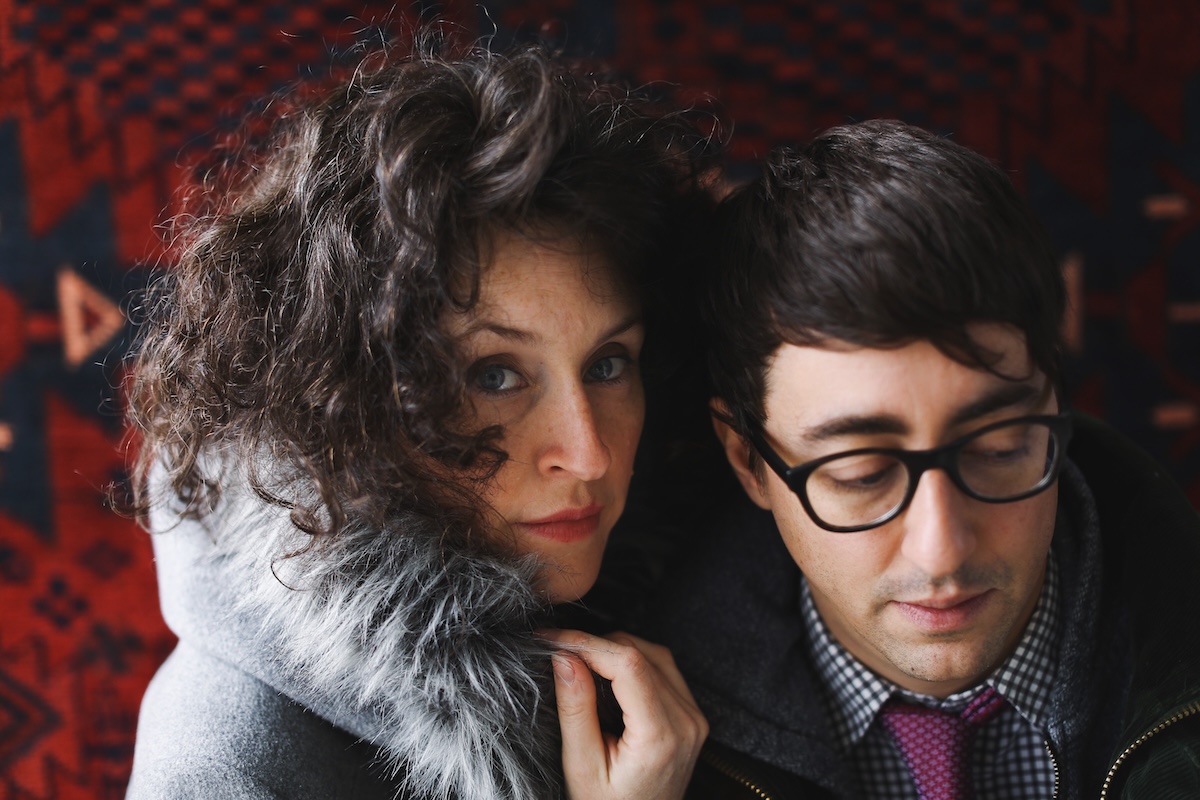
Julia Úlehla & Dálava

Sat   Mar   28   2026 - 8:15 PM St. John's Cathedral

Dálava, the genre-defying ensemble led by vocalist Julia Úlehlawith guitarist Aram Bajakian (Lou Reed, John Zorn, Diana Krall), returns with Understories, a deeply evocative new album that explores uncharted territories of sound. Seamlessly weaving Moravian folk traditions with an experimental, improvisational approach, Understories takes the listener on a journey through captivating sonic worlds. Dálava’s music has received critical acclaim for its expressive depth: fRoots extolled their prior release as “so overwhelming and so intense that it is hard to put into any category…. Saying that The Book of Transfigurations is a masterpiece is not an exaggeration.”

Most of the pieces in Dálava’s repertoire are inspired by a collection of folk songs compiled in the book Živá Píseň (Living Song) written by Úlehla’s great-grandfather. A biologist and ethnomusicoloist, Vladimír Úlehla (1888-1947) meticulously transcribed hundreds of folk songs from his hometown, the Moravian village of Strážnice in southeast Czechia. On Understories Julia Úlehla exhibits an ineffable kinship to these songs, a deeply-rooted living bond to the land of her father’s and great-grandfather’s birth. The American-born daughter of a refugee from communist Czechoslovakia, Julia Úlehla directs Dálava’s interpretations of these centuries-old transcriptions, ensuring they are conferred with a respect not only for the music as a historical artifact, but as living, breathing organisms that speak to their metaphysical universality. Dálava, which means ‘the disappearing line on the horizon, where sky and land merge into each other,’ is an apt description of the group’s approach: The music resides in that indeterminate, liminal space between past and future, magic and realism, neither primordial nor of this world. The album is a sonic exploration that transcends time and borders, fusing disparate traditions into a singular, emotionally charged experience.

Úlehla asserts that Understories marks a departure from her previous Dálava releases: “It used to really matter to me what my family and other Czechs —especially tradition bearers — thought about what I was doing with these songs. But at the time we made this record it felt like I was tuned to a layer of reality that was not human, fumbling through some strange form of unbidden mysticism. I’ve come to realize that to encounter the realm that the record yearns to conjure, a listener needs to be willing to venture down below — to descend through subterranean layers or meet the “understories” carried in folk song’s palimpsestic layers, some of which are fugitive and full of grief. Rather than provide a translation of the lyrical content of the songs, the song titles mark the stages of an underworld journey — what the Greeks called katabasis. “Open your ear to the great below” — the crossroad opens. “Escape velocity” — a song in which a girl leaves home and turns herself into a speckled bird corresponds to a protagonist’s decision to leave for the great below and the transformation that will be required.

After graduating from Stanford University and the Eastman School of Music, Úlehla performed as a lyric mezzo-soprano in operas for years and was subsequently a member of the renowned laboratory theatre the Workcenter of Jerzy Grotowski and Thomas Richards in Pontedera, Italy. Moving to New York City to start a family with Aram, Julia began singing with Darius Jones’ Elizabeth-Caroline Unit, while also beginning explorations of her great-grandfather’s book. In 2013 the family moved to Vancouver, BC, for Julia to pursue a PhD in Ethnomusicology from the University of British Columbia. On Understories, singing in Czech and English, Úlehla’s hypnotic voice vibrates with intensity, spanning from whisper to holler, by turns vulnerable and stentorian. Her singing feels less like a performance than a fully-embodied life force emanating from every sinew and bone. “I’m compelled by a desire to learn to give voice to the full range of human emotions and experiences. It’s not about using strange voices, or extended techniques, or characters. It is about collaborating with whatever comes, being utterly in the present and attentive to what is unfolding.” Bajakian, who is married to Úlehla, was an active member of the downtown New York scene who toured extensively with musicians as disparate as Lou Reed, Diana Krall and Madeleine Peyroux, and performed the music of John Zorn with the group Abraxas. He has also explored folk traditions, both with Frank London’s Glasshouse Orchestra, and his own Armenian ancestry with his project Aram Bajakian’s Kef. They are joined by Peggy Lee on cello and Josh Zubot on violin, both of whom recently appeared on Darius Jones’s fLuXkit Vancouver (i̶t̶s̶ suite but sacred), and are important parts of the fertile creative music scenes in Vancouver and Montreal. Their music is by turns ethereal and ferocious, the sound of whispering winds and the crunch of dirt underfoot as one descends into a deep, unknowable chasm.

BIG EARS
03.26_03.29.26
Knoxville, TN · USA

Festival

Learn more about what The New York Times calls “one of the world’s greatest music bashes.”

Support

Be part of what makes Big Ears possible—give, volunteer, shop, or support emerging artists through scholarship to keep the music and mission alive.

Connect

Discover, learn, and get in touch—connect with Big Ears through stories, updates, and the people behind the festival.

Beyond

Explore ideas, concerts, and collaborations that take Big Ears beyond the festival stage.